Across the UN system, a diverse portfolio of AI capacity-building programmes are being developed and deployed to strengthen AI skills, knowledge, and expertise for Member States, through a range of initiatives including training programmes, mentoring schemes, research placements, communities of practice, and fellowships. In line with paragraph 86 of the WSIS+20 outcome document, this page responds to the call for the UN Inter-Agency Working Group on Artificial Intelligence, in consultation with Action Line Facilitators, to map system-wide capacity-building efforts on AI, providing an accessible and consolidated overview of ongoing and upcoming activities.
This includes AI fellowships available within the UN system that can help provide sustained, structured support to build advanced AI expertise, leadership capacity, and long-term institutional capabilities within the public sector through funding, mentorship, research, and practical application.
The UNIDIR Women in AI Fellowship seeks to counter the chronic under-representation of women in international security processes, where only one in every three diplomats accredited to arms control, non-proliferation and disarmament forums is a woman. This capacity-building initiative equips women diplomats with the expertise to explore the latest and emerging AI applications from policy, legal and technical lens. Fellows develop the knowledge and skills required to engage effectively in multilateral AI discussions in the field of international peace and security.

UNESCO's AI and the Rule of Law programme has trained judicial actors in over 165 countries on the responsible use of AI in the judiciary through national and regional trainings based on the Global Toolkit on AI and the Rule of Law. Through a global network of experts, a flagship MOOC and the comprehensive Global Toolkit - developed under the Recommendation on the Ethics of AI - UNESCO equips judges, prosecutors and court administrators to apply human-rights standards to issues such as bias, transparency, privacy and algorithmic decision-making, while also leveraging AI to enhance access to justice and the efficiency of judicial administration.
The Artificial Intelligence for the Public Sector Fellowship is a funded programme designed to build practical AI capacity among public sector professionals. It equips selected participants with the knowledge and tools to understand AI systems, assess their risks and implications, and develop concepts for AI-driven public services grounded in real-world use cases.
Fellows receive financial support to participate, covering course fees and engagement activities, and join a cohort of practitioners committed to applying AI responsibly to public policy and service delivery challenges.
The UNDP ICPSD SDG AI Lab's Data Science Fellowship Programme is the first corporate fellowship designed for tech professionals. It empowers young data scientists to lead inclusive digital transformation in their communities while advancing the Sustainable Development Goals (SDGs). Fellows contribute to Lab projects applying AI, ML, and GIS to real development challenges — from poverty to disaster response. The Lab supports fellows with advanced training, mentoring, and research opportunities to strengthen their technical and leadership capacities.
The UNESCO AI Ethics Action Cohorts are a six-month capacity-building programme that supports public officials in Africa and Small Island Developing States (SIDS) to operationalize the UNESCO Recommendation on the Ethics of Artificial Intelligence. Participants receive expert mentorship and peer-learning support while applying UNESCO's Ethical Impact Assessment (EIA) and AI Readiness Assessment Methodology (RAM) tools to real national AI governance challenges, helping strengthen institutional capacity for ethical AI policy and implementation. Applications for the current cohort are open to eligible participants from African countries and SIDS until 31 July 2026.
The UN Women AI School designed to build inclusive, gender-responsive AI literacy for changemakers across the Asia-Pacific region. It equips young leaders, UN staff, and policymakers with the knowledge and skills to harness artificial intelligence for advocacy, innovation, and social impact. Through adaptive learning tracks, expert talks, hands-on projects, and a graduation competition, the AI School empowers participants to co-create ethical, effective AI solutions that advance gender equality and sustainable development.
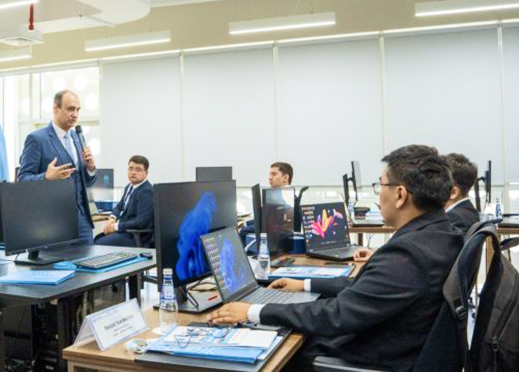
The AI-Powered Investigation Techniques for Law Enforcement, Prosecutors and Judges training is an in-person upskilling programme designed to equip law enforcement officers, prosecutors, and members of the judiciary with practical, investigation-ready AI skills. The course focuses on the application of AI tools across the investigative lifecycle - from identifying suspects to analyzing digital evidence and developing structured case profiles. Participants gain hands-on experience with technologies such as facial recognition, large language models, and network/link analysis, enabling more efficient and evidence-based criminal investigations.
The AI for Educators Training Programme is a two-day executive training in Geneva designed to equip education professionals with the skills and strategies required to integrate Artificial Intelligence responsibly and effectively into teaching, learning, and institutional practice. This initiative offers a structured platform for advancing AI literacy, enhancing pedagogical practice, and strengthening institutional leadership in the context of rapid technological change. Participants will gain practical experience with AI tools, engage in peer learning, and contribute to discussions on ethics, inclusivity, and policy frameworks shaping the future of education.
The AI Skills Coalition is the UN-led global, open, trusted, and inclusive platform for AI education and capacity building. A key focus is equipping professionals across sectors–including business leaders, policymakers, academics, researchers, students, and educators–with AI skills and knowledge. Priority is given to learners from developing and Least Developed Countries, with a strong emphasis on women and girls, to empower governments, businesses, and organizations in leveraging AI for sustainable development and good governance.
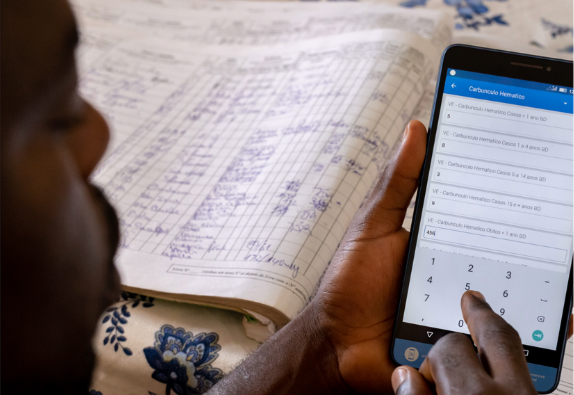
A year-long project to equip Mongolian law-enforcement officials with AI-based and open-source intelligence (OSINT) techniques to investigate human-trafficking cases in the digital era. Launched in July 2023 in collaboration with the Bali Process Regional Support Office (RSO) and the Coordination Council of Crimes Prevention of Mongolia, and supported by the IOM Development Fund, the project delivered the first artificial-intelligence-based cyber-crime investigation training to law enforcement in Mongolia. Through a unique multi-workshop format, the same officers from six law-enforcement and intelligence agencies built skills across three OSINT sessions over six months (Jan–Jun 2024), covering search-engine techniques, officer privacy and safety, digital-footprint analysis, semi-automated and automated data scraping, and the use of AI-generated tools (e.g. ChatGPT), with each technique applied to trafficking-in-persons case studies. The work responds to traffickers' growing misuse of social media, dating apps and false job advertisements, and aligns with Mongolia's Vision-2050 and Digital Nation strategies and the IOM Strategic Plan's emphasis on protecting migrants through evidence-based, innovative solutions.
Activity Type Trainings/WorkshopsTechnical Assistance
UNESCO has launched the global call for applications for the second edition of the Youth for Peace: UNESCO Intercultural Leadership Programme, a global initiative supporting emerging leaders (aged 25-45) who use intercultural dialogue to foster peace, social cohesion and inclusive community action. The 2026 edition will focus on the theme “Human Connection and Dialogue in the Age of AI.”
UNESCO is looking for candidates who are exploring how AI can be leveraged to strengthen human connection, foster dialogue across differences, and advance positive social impact, for example in areas such as: AI ethics, digital transformation, digital inclusion, intercultural dialogue, peacebuilding, social cohesion, youth leadership, education, science policy, and community-based action.
Over the course of the programme, 50 selected participants will: Take part in high-level online masterclasses and peer-to-peer exchanges from October to December 2026; Receive USD 10,000 in seed funding to design and implement a dialogue-based community initiative from January to July 2027; Benefit from mentorship and leadership development opportunities; Join a global community of emerging intercultural leaders and UNESCO’s Global Youth Alumni Network; Participate in the UNESCO Global Youth Dialogue for Peace in China in Q3/Q4 2027, subject to confirmation.
Applications are open until 19 July 2026 at 23:59 CEST, Paris time.
Full details and the application form are available here: https://www.unesco.org/en/call-applications-2026?hub=181405
The UNIDIR Women in AI Fellowship seeks to counter the chronic under-representation of women in international security processes, where only one in every three diplomats accredited to arms control, non-proliferation and disarmament forums is a woman.
This capacity-building initiative equips women diplomats with the expertise to explore the latest and emerging AI applications from policy, legal and technical lens. Fellows develop the knowledge and skills required to engage effectively in multilateral AI discussions in the field of international peace and security.

UNU Macau provides a tool that helps policymakers and UN staff use generative AI (LLMs) effectively, reliably, and ethically. It offers guidance on identifying and avoiding biases, while teaching users how to frame prompts to obtain information from trustworthy sources.
Activity Type AI Tools/SolutionsTrainings/WorkshopsThe eLAC Digital Agenda is the intergovernmental regional policy framework coordinated by ECLAC to advance digital transformation in Latin America and the Caribbean. Artificial Intelligence has become one of its strategic priorities, fostering regional cooperation on AI governance, productive adoption, digital infrastructure, data governance, digital skills, and innovation.
Activity Type Trainings/WorkshopsTechnical AssistanceResearch/Reports/AssessmentsPolicy/Regulatory GuidanceAwareness/AdvocacyNetworks/Mentorship/ExchangeRESMA is a methodological framework for designing and implementing regulatory sandboxes that enable governments to safely test innovative digital technologies, including AI, under controlled regulatory environments. The methodology provides guidance for regulatory experimentation while balancing innovation, consumer protection, and public interest
Activity Type Trainings/WorkshopsResearch/Reports/AssessmentsPolicy/Regulatory GuidanceA practical implementation guide designed to support public institutions throughout the lifecycle of AI projects—from problem identification and feasibility assessment to procurement, governance, implementation, monitoring, and evaluation. The guide promotes responsible, transparent, and human-centered AI aligned with international best practices.
Activity Type Trainings/WorkshopsResearch/Reports/AssessmentsPolicy/Regulatory Guidance
The Research Coalition on AI for Equity and Inclusion (ReCoAIEI), convened by the United Nations Research Institute for Social Development (UNRISD), brings together researchers and institutions committed to advancing knowledge on the social, economic, and political dimensions of artificial intelligence.
The coalition examines the political economy of AI and its implications for equity, inclusion, democracy and sustainable development. Rather than treating AI governance as a purely technical or regulatory challenge, ReCoAIEI situates AI within political economy, focusing on its implications for the production and distribution of power and resources. It seeks to provide evidence and policy insights that shape a structure of good governance for equity and inclusion at the national, regional and global levels. It addresses various aspects of AI governance. including languages and cultures, which are the basis of an AI-generated cultural ecosystem.
In addition to collaborative research, the coalition serves as a platform for knowledge exchange, dialogue, and dissemination on AI for equity and inclusion. It aims to strengthen connections among researchers, policymakers, public and social security administration, practitioners, and international organizations working to ensure that AI contributes to sustainable and inclusive development.
To maintain momentum between Geneva 2026 and New York 2027, coalition partners envisage undertaking a series of collaborative activities during 2026–2027, including:
• Joint research projects and publications;
• Collaborative policy briefs and policy dialogues;
• Capacity-building and knowledge-sharing activities;
• Coordinated engagement with the Global Dialogue process on AI governance.
Specific commitments and activities will be developed collectively by coalition members and partners.